
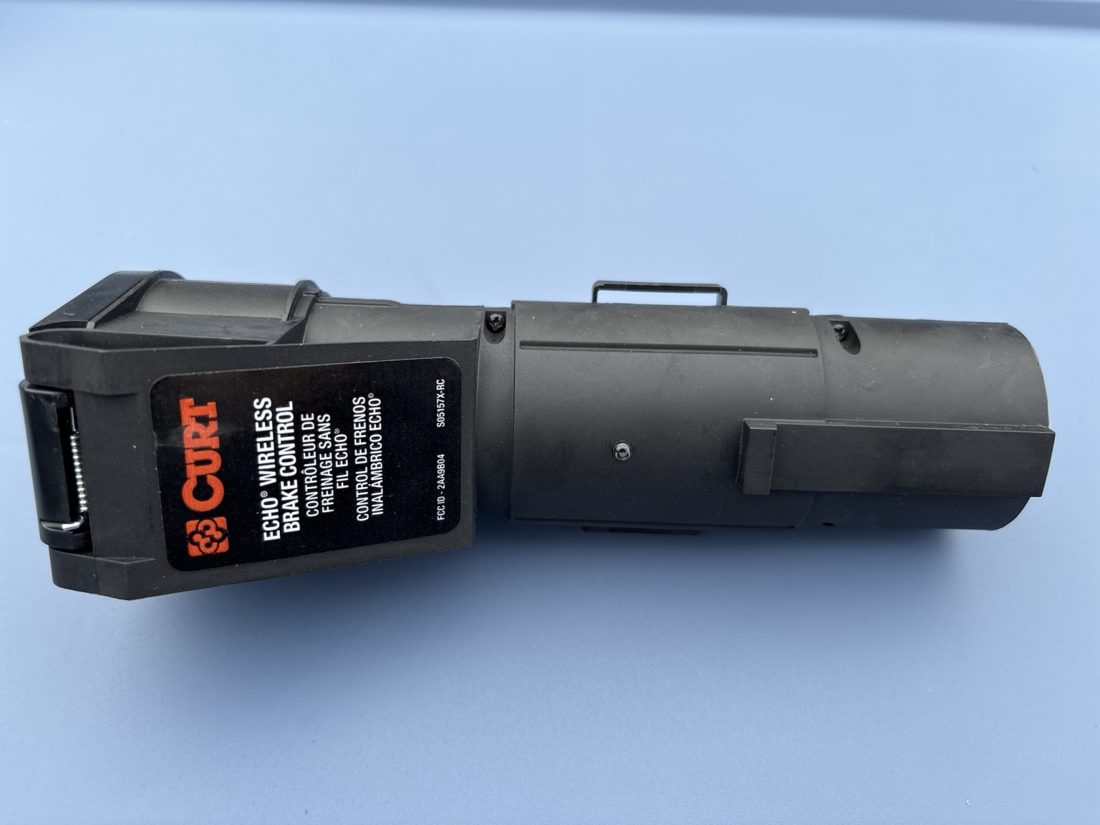
Before our Missouri-to-Nashville RV trip, I had a simple concern about the CURT Echo Mobile: would a phone-connected brake controller stay connected and feel predictable over a real towing day? We used it with our 2026 Hyundai Santa Cruz and 2026 KZ Sportsmen Classic 130RD. In this trip, it worked flawlessly. It stayed connected, our brake checks worked correctly, and trailer braking felt predictable.
That is our experience with one truck, trailer, controller, and trip. It is not a promise that every phone or tow setup will behave the same way. The biggest lesson was to tune the controller for your own loaded rig and do controlled brake checks before joining highway traffic.
Why we used the Echo Mobile on this tow vehicle
Our Santa Cruz’s 2.5L non-turbo engine and compact travel trailer make a small-rig combination, but the trailer still needs a properly functioning brake system. We already had a seven-way connection in our towing setup. A portable controller that plugs between the vehicle’s seven-way socket and the trailer plug appealed to me because it avoids installing a permanent controller in the cab. That is a choice about installation and portability, not a shortcut around checking the vehicle’s wiring and trailer brakes.
CURT identifies the Echo Mobile as model 51180. According to CURT’s product information, the app communicates by Bluetooth, allows brake-output and sensitivity adjustment, and the unit plugs into a seven-way RV blade socket. CURT’s installation manual specifies a working +12V supply, ground, and turn-signal circuits at the vehicle socket. Those are manufacturer requirements; our firsthand result is that our installed setup passed our checks and worked on this trip.
Our Nashville gear article shows the controller alongside the other equipment we used. The trip account covers the towing and arrival decisions.
Setup and brake checks before the highway
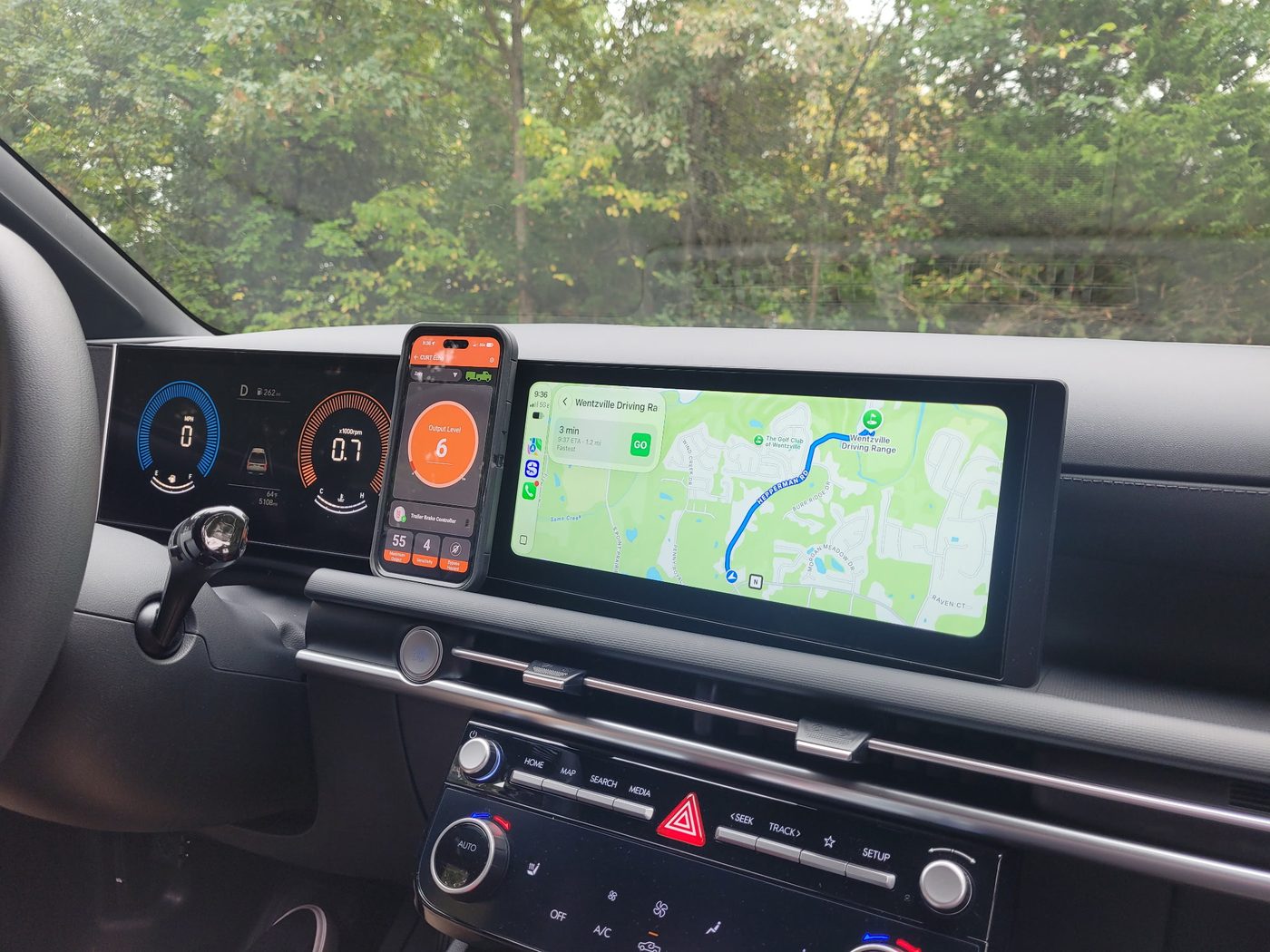
We connected the controller as part of our trailer hookup, used the phone app to manage its settings, and performed brake checks. The checks worked correctly. The photo below records one setting displayed during a stationary pre-trip check, but I do not have a verified final output or sensitivity value to recommend. Copying somebody else’s number would be poor advice anyway.
Brake response depends on the actual trailer weight and loading, brake condition, vehicle, road surface, and how the combination responds. The goal is a smooth, predictable contribution from the trailer brakes, without a grabby or weak feel. Follow CURT’s manual for pairing and adjustment and the trailer and vehicle manuals for your combination. Make initial controlled tests in a safe area at low speed, before highway traffic, then reassess when the load or conditions change. Make setting changes while parked; CURT warns against distracted adjustment while driving.
The Echo’s phone-based interface is convenient for setup, but it makes preparation more important. Check that the unit has power, the app is paired, the active profile is the one you intend to use, and the trailer brakes respond before departure. Secure the phone so it does not distract you. A functional connection at the vehicle socket is essential; a phone pairing screen alone is not a brake test.
What happened on the Nashville drive
On this trip, the feared connection issue never happened. The Echo stayed connected throughout the tow. Brake checks worked, and the braking remained predictable in our normal use. I did not observe an operational failure to report. That confidence mattered more than a long feature list while towing a travel trailer behind a smaller vehicle.
I would still avoid saying the controller cannot disconnect. We had a successful trip, not a reliability study across phones, weather, and wiring conditions. If you are diagnosing your own setup, CURT’s troubleshooting guide covers pairing, power, ground, and warning conditions.
What if the phone loses Bluetooth?
CURT says the Echo Mobile continues to operate with its most recently programmed settings if the Bluetooth connection is lost. CURT also notes that the app’s manual override is unavailable during a disconnection. We did not experience that failure on this trip, so I am describing the manufacturer’s behavior, not claiming to have tested a disconnect on the road.
This distinction matters. Normal brake-pedal response and access to a manual trailer-brake command are not the same thing. A driver who wants a physical manual-control option can review CURT’s compatible manual override button and the current instructions; we are not claiming to have used that accessory. Do not handle the phone to troubleshoot while moving. Stop safely, inspect the connection and app, and resolve any brake warning before continuing.
Strengths and tradeoffs after our trip
| What worked for us | What to consider |
|---|---|
| Portable seven-way installation suited our Santa Cruz setup. | The vehicle socket still needs the required circuits and a sound connection. |
| Our phone connection stayed up for the trip. | The app is used for setup and manual control; plan for phone access and a possible disconnect. |
| Brake checks passed and braking felt predictable. | Output and sensitivity must be adjusted for the actual loaded combination. |
| No noteworthy operational failure in our Nashville test. | One trip cannot establish long-term reliability or performance for every rig. |
The greatest advantage for us was getting useful trailer-brake control without adding a permanent in-cab unit. The chief tradeoff is paying attention to the app, phone, seven-way power, and adjustment. It is a practical option for an owner who values portability and will take the time to test it. Someone who prefers a fixed control they can reach without a phone may favor a different style.
Two electronic tools, two different jobs
We also used an OBDLink MX+ during the same tow. That scanner recorded engine and vehicle information; it did not control trailer braking. Our OBDLink MX+ towing data review analyzes the logged speed, RPM, coolant temperature, and estimated MPG, including the transmission-temperature PID that did not work. The Echo and the MX+ were useful for different reasons, and neither replaces inspection of the hitch, tires, chains, wiring, and trailer brakes.
Questions we had before using the Echo
Did the CURT Echo disconnect on our Nashville trip?
No. In our use it stayed connected throughout, and we did not experience the Bluetooth problem I had worried about. Other combinations and phones may behave differently.
What settings should I use for my trailer?
There is no transferable number from our trip. Tune it for your actual tow vehicle and loaded trailer, using CURT’s instructions and controlled low-speed brake checks before the highway.
Does the Echo need a working phone to brake?
CURT says normal braking continues at the last programmed settings if Bluetooth drops, while app-based manual override is unavailable until connection returns. That is manufacturer information; we did not intentionally disconnect it during our drive.
Is it a fit for a Hyundai Santa Cruz?
It worked with our 2026 non-turbo Santa Cruz and seven-way setup. Verify your own vehicle’s wiring, towing limits, trailer brake configuration, and CURT’s current compatibility guidance before relying on it.
Our verdict
I would use the CURT Echo Mobile again on this combination. It passed the brake checks, stayed connected, and gave predictable braking throughout the Nashville trip. I was especially glad the connection worry did not become a real problem. The part I would emphasize to another owner is the preparation: confirm the seven-way wiring, set it for your trailer, test the brakes in a safe place, and keep the phone interface ready without letting it become a driving distraction. Our RV departure checklist is a useful companion for the rest of the pre-trip walkaround.
Keep building capability
Take the next trip with a better plan.
Join the Out West Club and get the free 25-Point RV Departure Checklist—plus occasional practical notes for travel, connectivity, preparedness, and gear.