
Affiliate disclosure: Out West Survival may earn a commission from qualifying links on this page, at no extra cost to you. Check current product details and availability before purchasing.
Certainly, it’s important to approach the topic of survival during acts of terrorism and violence with sensitivity. However, it’s never too late for emergency preparedness by increasing personal safety and awareness.
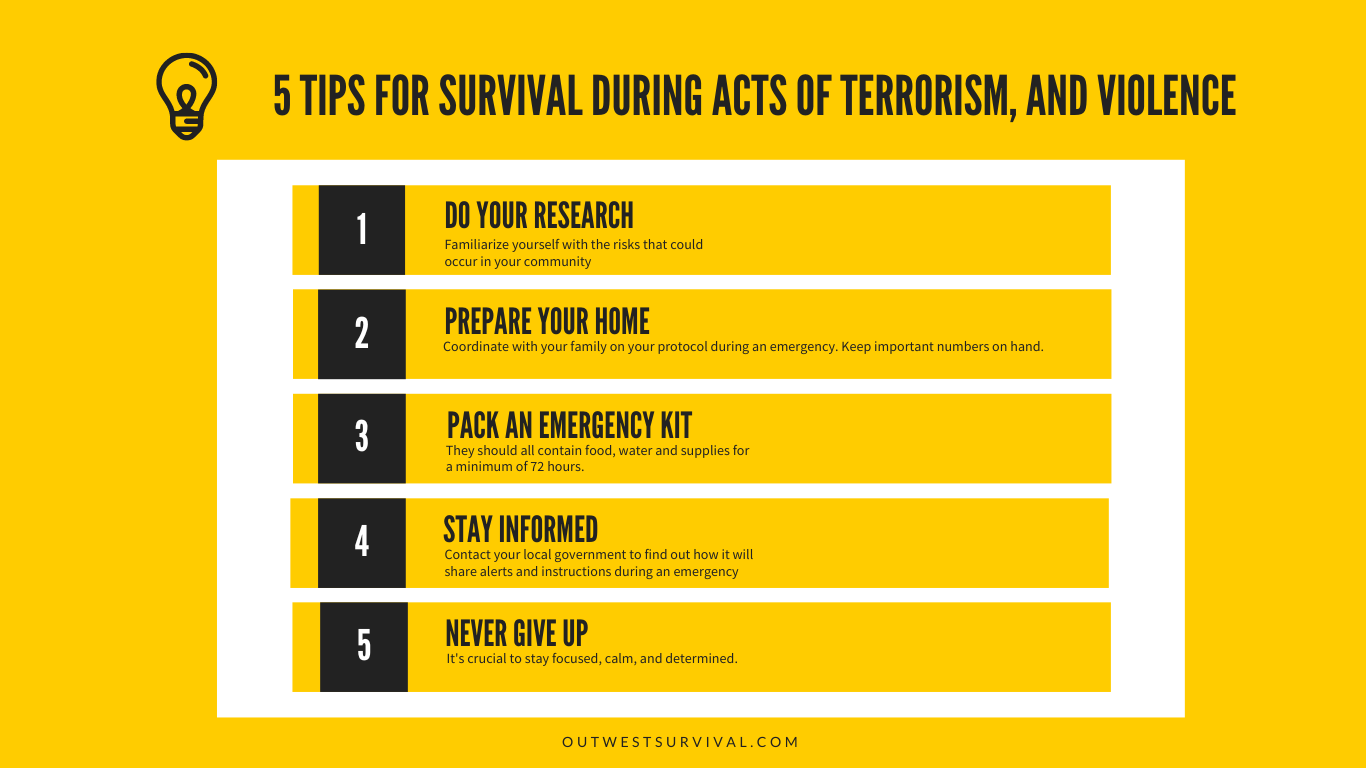
Here are five general survival tips:
- Research and Awareness: Stay informed about the current situation and potential risks in your area. Regularly follow reliable news sources and government alerts. Understand the common signs of suspicious activities and be aware of your surroundings. Familiarize yourself with emergency procedures and evacuation routes. Local law enforcement agencies often provide resources and information about potential threats, as well as FEMA (Federal Emergency Management Agency).
- Prepare Your Home: Create a safe and secure environment at home. Consider reinforcing doors and windows, and installing security systems if possible. Have an emergency plan for your family, which includes designated meeting points and communication channels. Ensure that everyone in your household knows what to do in case of an emergency. Practice evacuation drills regularly. Keep emergency supplies such as non-perishable food, water, first aid kit, backup power generators (e.g., GoSun Power Generators), and important documents in a readily accessible location.
- Pack an Emergency Kit: Prepare a portable emergency kit that you can quickly grab in case of evacuation. This kit should include essential items such as a flashlight, extra batteries, a multi-tool, a first aid kit, medications, copies of important documents (ID, passport, insurance), cash, and a map of your local area. Consider personalizing the kit based on the specific needs of your family members, including any special requirements for children, elderly family members, or pets.
- Stay Informed and Have a Communication Plan: Keep abreast of the latest information during an emergency. Have a reliable communication plan with your family and friends. Designate an out-of-town contact who can serve as a central point for information. During an incident, mobile networks may become congested, so having alternative means of communication, such as two-way radio (e.g., Ham Radios and CB Radios), can be useful. Follow official instructions from authorities and avoid spreading unverified information.
- Never Give Up: It’s crucial to stay focused, calm, and determined. Always follow your emergency plan and the guidance of authorities. If escape is not immediately possible, find a secure location, barricade yourself if necessary, and remain as inconspicuous as possible. Survival often requires a strong will to endure and adapt. If you’re trained to do so, consider self-defense techniques, but always prioritize safety and only use force as a last resort. Remember that your primary goal is to protect yourself and your loved ones. In challenging situations, a resilient and determined spirit can make a significant difference in ensuring survival.
Remember, personal safety is paramount, and these tips are meant to increase awareness and preparedness rather than encourage confrontation. Always prioritize following the guidance of local authorities in any emergency.
Keep building capability
Take the next trip with a better plan.
Join the Out West Club and get the free 25-Point RV Departure Checklist—plus occasional practical notes for travel, connectivity, preparedness, and gear.