
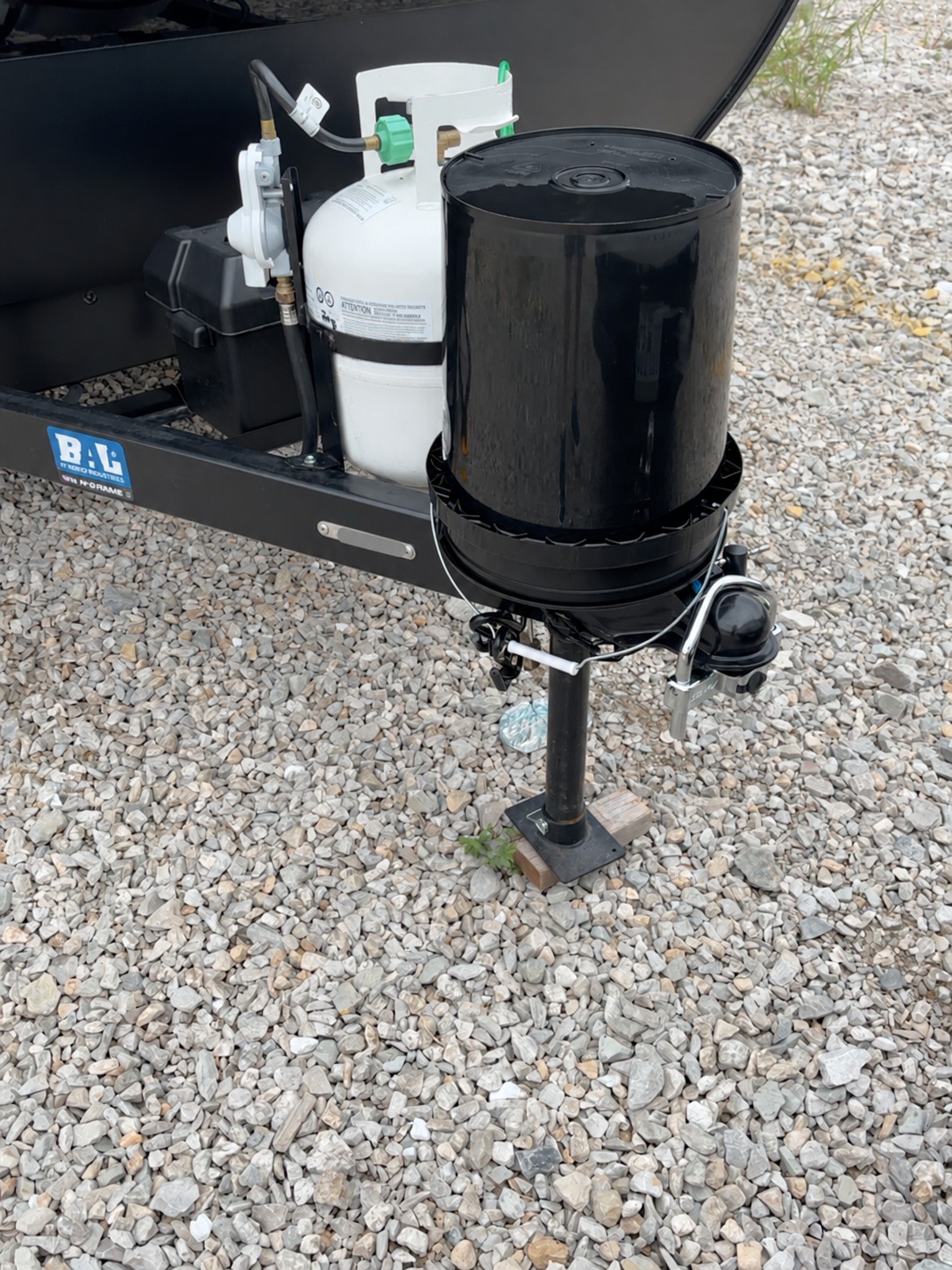
You unhitch at the campground, take the truck into town, and leave your travel trailer behind for the afternoon. Or perhaps it sits in a storage lot between trips. How much protection does it really have once you drive away?
Our approach to RV security while parked is simple: make our rig a less appealing choice than an easier target. A thief looking for a quick, quiet opportunity now has to deal with more visible obstacles and spend more time at our trailer. We use a coupler lock and a wheel clamp on our small travel trailer, and lower the stabilizer jacks when it is stored. The photos here show our actual setup. None of these measures is theft-proof, and gear that works on our trailer may fit yours differently.
Quick answer: Make an opportunistic thief work harder and more visibly. For a parked travel trailer, start with a properly fitted coupler lock, add a wheel clamp, lock the doors and compartments, take valuables out of sight, and choose a visible, well-managed parking spot. Keep your RV identification and insurance details handy.
1. Lock the coupler when the trailer is unhitched
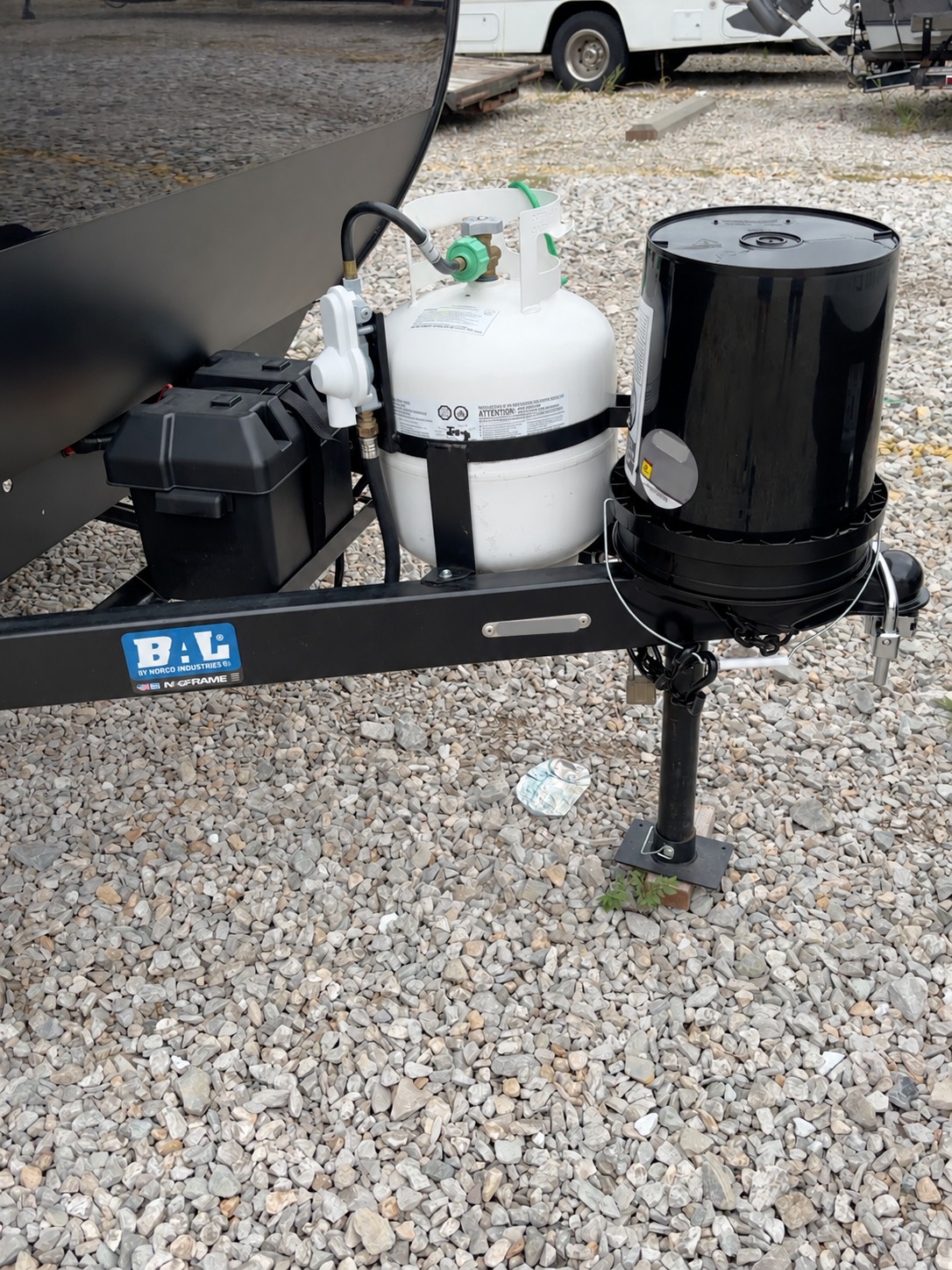
A coupler lock covers or blocks the trailer’s ball socket, making a quick hitch-up more difficult. This is the first piece of equipment we install after parking and unhitching. Our photos show a Fastway lock fitted over the coupler. Check your own coupler size and shape before buying any lock, and test its fit at home. A lock with a loose fit or exposed leverage points gives you less protection than you expect.
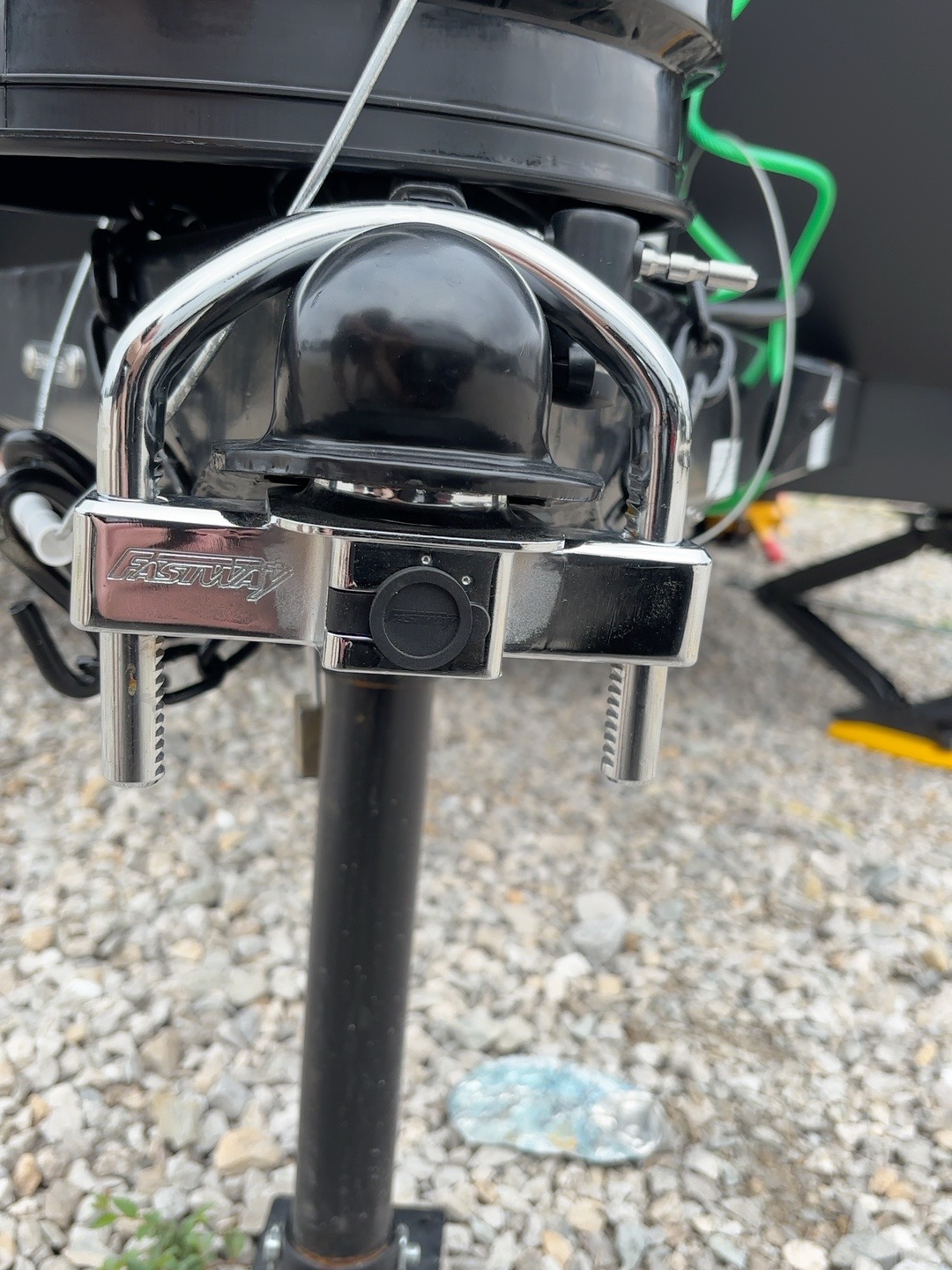
For longer stays, inspect the lock for corrosion or damage and keep the key somewhere you can find it when you leave. If the trailer remains connected to your tow vehicle, use the appropriate coupler latch lock instead. A lock on the receiver pin that holds the ball mount in the tow vehicle is another useful layer while hitched; it protects a different connection and does not replace the coupler lock used when unhitched.
2. Add a wheel clamp as a second physical barrier
A visible wheel clamp makes rolling the trailer away more difficult even if someone defeats the coupler lock. We put one on our single-axle trailer while it is parked. Confirm that the clamp fits your tire and wheel, engages securely, and does not touch the valve stem or brake components. Store its key separately from your trailer keys.
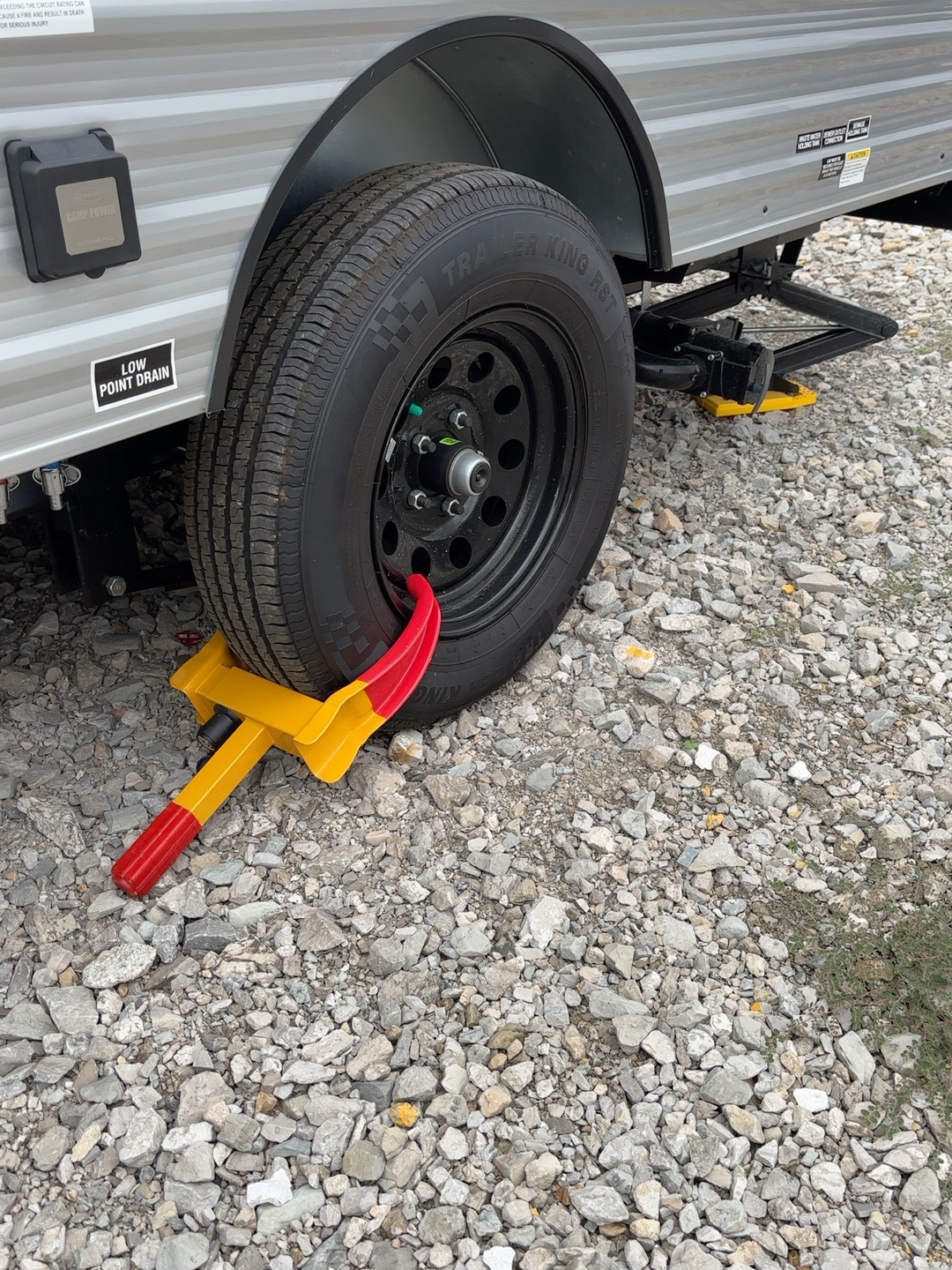
Remove the clamp before towing. Make it an item on your departure walkaround; driving away with it attached can damage the trailer and the clamp.
3. Know what chocks and stabilizers actually do
We also chock the wheels and lower the stabilizer jacks when parked and during storage, as the trailer’s instructions allow. Chocks help keep a trailer from rolling, and stabilizers reduce movement while we are inside. With jacks down, someone trying to move the trailer has another visible setup step to deal with, but ordinary chocks and stabilizer jacks are parking equipment, not security locks. Do not rely on them to stop a determined thief. Use them for their intended purpose, then add a real wheel lock for theft deterrence.
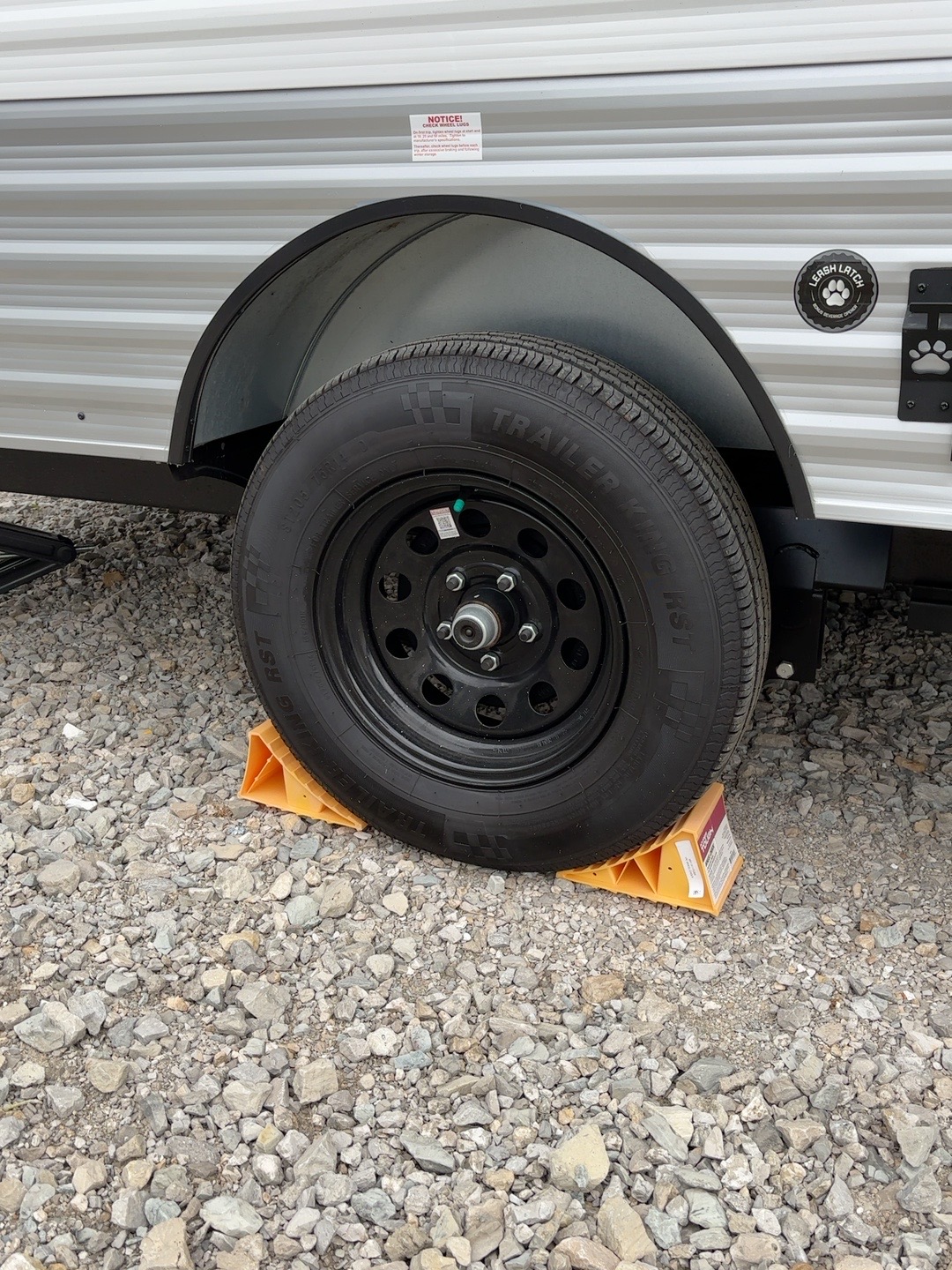
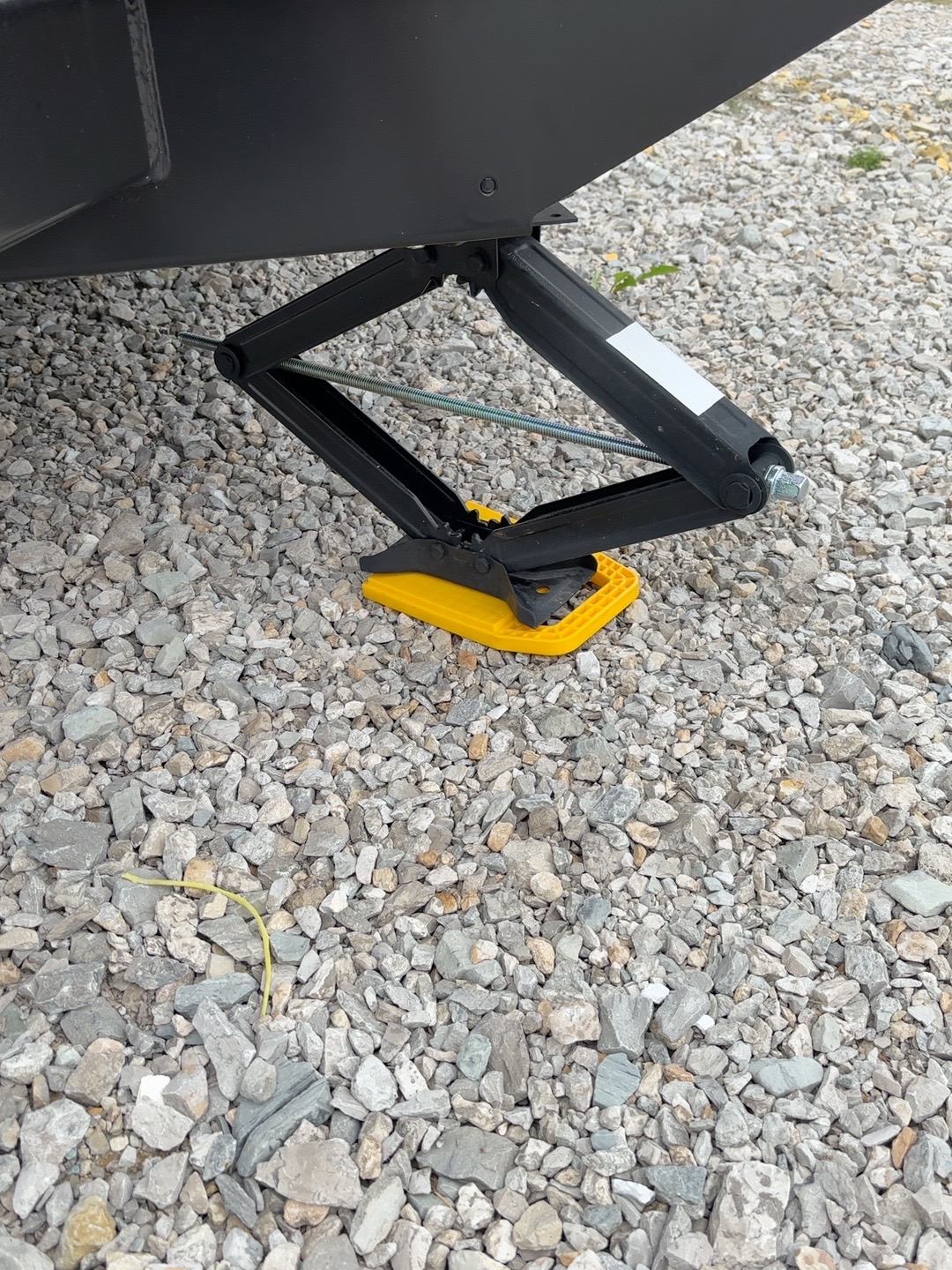
Never use a stabilizer jack to lift a trailer for wheel or tire work. Follow the trailer manufacturer’s instructions for lifting and stabilizing.
4. Secure the spare tire and loose exterior gear
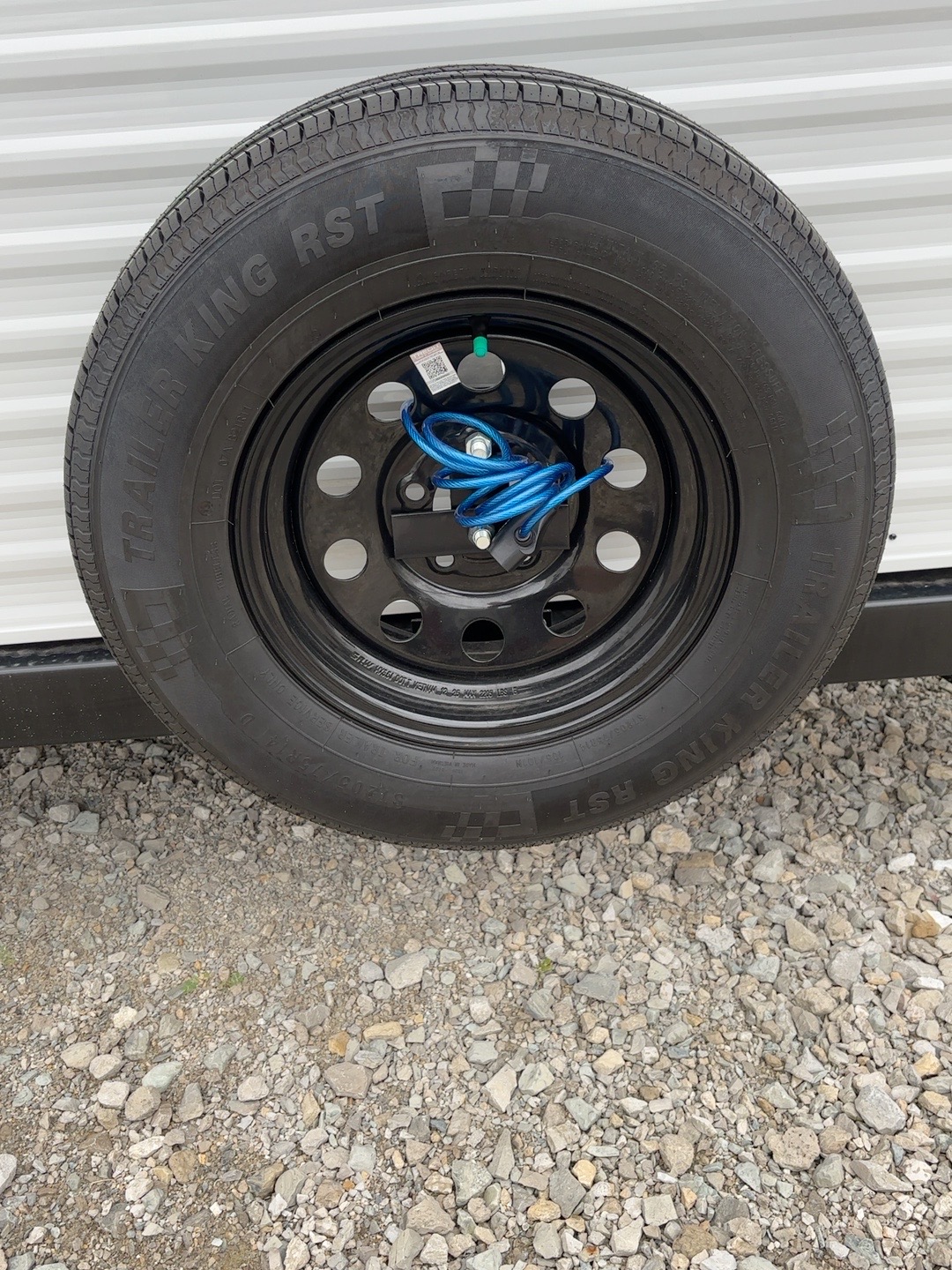
The whole trailer is one target; the gear attached to it presents another. Our spare tire has a cable through the wheel as an extra obstacle. A cable can be cut, so look for appropriate cable thickness and a protected lock, and treat it as a delay rather than a guarantee. Secure bikes, portable generators, grills, tools, and cargo boxes with hardware appropriate to their value and where they are mounted. If practical, bring expensive portable gear inside when you leave.
5. Lock the entry door, windows, and storage compartments
Before leaving the site, close the windows, latch roof vents as weather requires, lock the main door, and check every exterior compartment. Test locks after closing them: a compartment door can look shut without fully latching. Consider upgrading weak or widely shared compartment hardware if it is a concern on your RV, and keep an emergency key in a secure place away from the trailer.
6. Make the inside less tempting
Close shades so a passerby cannot inventory your belongings. Move laptops, camera gear, wallets, and spare keys out of sight or take them with you. Do not leave your tow-vehicle keys or trailer paperwork where a break-in would put both at risk. Keep only what you need in the RV, especially during storage.
7. Choose the parking spot with security in mind
At a campground, favor a reasonably visible site with normal foot traffic and good lighting without blocking other campers or emergency access. At home, park where access to the hitch is less convenient if you can do so safely and legally. For storage, ask about controlled gate access, lighting, cameras, on-site presence, and how the facility handles incidents. A fence alone tells you little about how the lot is monitored.
8. Use lights, cameras, or an alarm when they fit your situation
A motion light or door alarm may draw attention to activity around the RV. A camera can help document an event, but check the campground’s rules and respect neighboring sites’ privacy. If you want remote alerts, confirm that the device has power and a working internet connection at that exact parking location. A camera without connectivity will not send you a warning while you are away.
9. Consider a tracker as a recovery tool
A dedicated cellular/GPS tracker can help report a stolen trailer’s location when it has power, coverage, and an active plan. A Bluetooth item tracker is a different tool: an AirTag, for example, relies on nearby devices in Apple’s Find My network for location updates and may alert a person traveling with it. Neither system keeps the RV from being stolen. Test the device and its battery or subscription before depending on it, and share any location with law enforcement rather than trying to recover a stolen trailer yourself.
10. Keep a private identification record
Save your trailer’s VIN, license plate, make, model, identifying features, current photos, purchase documents, and serial numbers of expensive installed equipment. Keep a copy somewhere accessible when you are traveling. Avoid posting a readable VIN, plate, lock key code, or precise storage location in a public article or social post. These details can help police and your insurer identify the trailer after a theft.
11. Check your insurance before the trip
Read your RV policy and ask your insurer what applies to theft of the trailer, personal belongings, and installed accessories, including deductibles and any storage conditions. Coverage depends on the actual policy. Don’t assume the RV itself and everything inside it are protected to the same limit.
12. Build a repeatable leave-the-site routine
The best equipment is the equipment you actually use. Before leaving our trailer, we make one short pass: lock the coupler, install the wheel clamp, confirm doors and compartments, secure loose gear, and look back at the campsite. Before towing, we reverse the process and physically verify that every anti-theft device is off and stowed.
Our two-minute parking check
- Coupler locked when unhitched; latch and receiver pin secured when hitched.
- Wheel clamp installed after parking, and removed before towing.
- Wheels chocked and stabilizer jacks down during parking or storage as the owner’s manual directs; raise and stow before towing.
- Spare tire, exterior gear, doors, windows, and compartments checked.
- Keys, valuables, photos, and RV records accounted for.
The aim is to make your rig a less convenient target by adding visible obstacles, time, and attention to an opportunistic theft while keeping your own departure process simple. Start with a coupler lock that fits your trailer, add a second physical barrier if you can, and practice the same quick check each time you park.
For the other half of that routine, get our free 25-Point RV Departure Checklist. It helps you check the tow vehicle, hitch, trailer, power, route, and communications before you leave.
Frequently asked questions
Is a coupler lock enough to prevent travel trailer theft?
No lock guarantees prevention. A well-fitted coupler lock adds an obstacle to hitching an unhitched trailer. A wheel clamp, secure parking, and consistent lock-up habits add other layers.
Do wheel chocks prevent trailer theft?
Regular wheel chocks are for preventing unwanted rolling while parked. They are easy to remove and should not be treated as a theft lock. Use a purpose-built wheel clamp for that role.
Should I use a hitch pin lock if my trailer is still attached to the truck?
Yes, a locking receiver pin can help secure the ball mount to the tow vehicle’s receiver. A coupler latch lock protects the connection at the trailer. Confirm that all towing hardware is compatible, correctly installed, and rated for your setup.
What should I do if my RV is stolen?
Contact local law enforcement promptly with the VIN, plate, photos, and last known location. Notify your insurer and the storage facility or campground. Share tracker information with police; do not confront a suspected thief yourself.
Keep building capability
Take the next trip with a better plan.
Join the Out West Club and get the free 25-Point RV Departure Checklist—plus occasional practical notes for travel, connectivity, preparedness, and gear.