
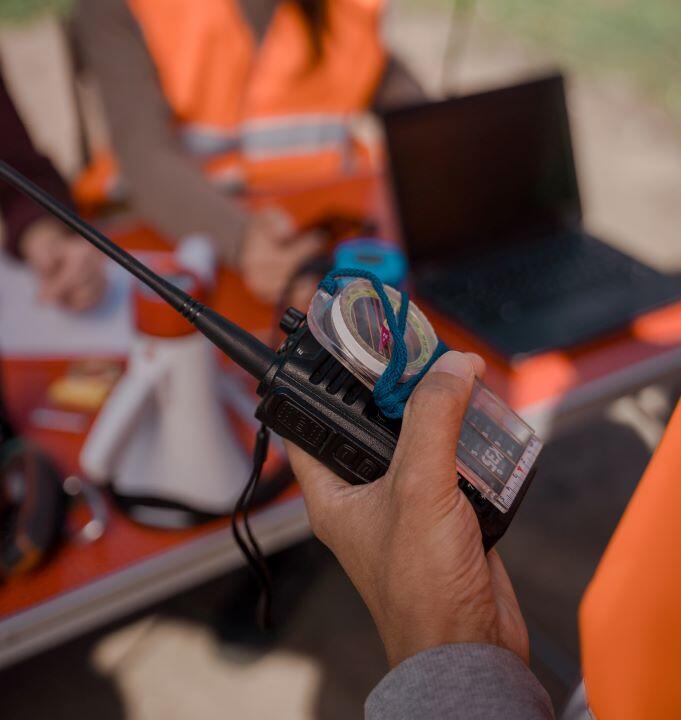
Two-way radios solve a simple problem for RV travelers: they keep people in contact when cellular service is weak, a campground is noisy, or two vehicles need to coordinate without repeated phone calls.
This guide focuses on practical radios for campground communication, backing into campsites, short vehicle convoys, hiking near camp, severe-weather monitoring, and emergency backup. It does not treat the large mileage number printed on a package as a guaranteed real-world range.
Disclosure: Out West Survival may earn a commission from qualifying purchases made through links on this page, at no additional cost to you. Recommendations are based on practical fit and published specifications.
Quick Picks: Best Two-Way Radios for RV Use
| Radio | Best RV use | Service | Important features |
|---|---|---|---|
| Cobra RX380 | Budget campground and family communication | FRS; no individual license required | Weather-resistant, NOAA alerts, flashlight, rechargeable batteries |
| Cobra RX680 | Rugged everyday RV and outdoor use | FRS; no individual license required | IP54, NOAA alerts, VOX, VibrAlert, charging dock |
| Cobra ACXT1035R FLT | Boating, heavy rain, and water-focused trips | FRS; no individual license required | IP67, floating design, NOAA alerts, Rewind-Say-Again |
| GMRS handheld or mobile radio | Longer-range family travel and repeater access | GMRS license required | Higher power options and repeater capability; model-specific |
Our Best Overall RV Pick: Cobra RX680
The Cobra RX680 is the most balanced option in this group for typical RV travel. It is compact, rechargeable, dust- and splash-resistant to IP54, and includes NOAA weather alerts, an LED flashlight, channel scanning, voice-activated transmission, and vibration alerts.
That feature mix works well for campground setup, keeping in touch during fuel stops, coordinating around a large event, or carrying a radio on a day hike. Cobra lists up to 18 hours of battery life under its stated test cycle, but actual battery life will depend on how much you transmit, volume, temperature, and battery condition.
Best for: RV owners who want one practical license-free radio set for travel and preparedness.
Best Budget Option: Cobra RX380
The Cobra RX380 covers the basics without adding unnecessary complexity. It provides standard FRS communication, NOAA weather alerts, a built-in flashlight, channel scanning, rechargeable AA NiMH batteries, and a charging cable.
This is the sensible choice for backing into a campsite, communicating between the RV and tow vehicle at a stop, keeping track of family around a campground, or adding an inexpensive radio pair to an emergency kit.
Best for: Short-range campground communication and an affordable backup set.
Best Waterproof Option: Cobra ACXT1035R FLT
The ACXT1035R FLT is the better fit when water exposure matters. Its published IP67 rating means the radio is designed for dust protection and temporary water immersion under the manufacturer’s stated conditions. It also floats, includes NOAA weather alerts, and can replay the most recent incoming audio with Cobra’s Rewind-Say-Again feature.
This is useful for RV trips that include boating, kayaking, fishing, heavy rain, or campsites near water. The rechargeable batteries are standard AA-size NiMH cells, which can be convenient when planning for extended travel.
Best for: Water-focused camping and travelers who prioritize weather protection.
FRS vs. GMRS for RV Travelers
FRS: easiest for most RV owners
FRS radios are the simplest choice for casual campground and family communication. They use fixed antennas and operate under the FCC’s license-by-rule structure, so an individual license is not required. They are well suited to short-distance communication where convenience matters more than maximum range.
GMRS: better when you need more capability
GMRS can support higher-power radios, detachable antennas on eligible equipment, and repeater access. A valid individual GMRS license is required to transmit. The license can cover the license holder and eligible immediate family members under current FCC rules.
For RV travelers, GMRS becomes more attractive when coordinating multiple family vehicles, traveling through areas served by repeaters, or installing a mobile radio with an external antenna. Confirm current FCC rules and verify that every radio is properly certified for the service in which it will be used.
The Truth About “Up to 38 Miles”
Package range claims describe ideal line-of-sight conditions—not a normal campground filled with trees, terrain, RV walls, buildings, and other obstructions. In real use, a handheld radio may cover part of a campground, a trail area, or a short vehicle-to-vehicle distance while falling far short of the advertised maximum.
Range improves when users have clear line of sight, move to higher ground, keep the antenna vertical, and avoid transmitting from inside a metal-sided RV. For safety planning, test the radios where you intend to use them and never treat a consumer handheld as the only way to request emergency help.
What Matters More Than the Mileage Claim
- Radio service: Choose license-free FRS for simplicity or properly licensed GMRS for additional capability.
- Weather protection: IP54 is useful for dust and splashes; IP67 is preferable around water.
- Charging: Decide whether a dock, USB cable, replaceable cells, or vehicle charging best fits your RV electrical setup.
- NOAA reception: Weather channels and alerts are useful, but they do not replace a dedicated weather-alert radio in every situation.
- Controls: Simple buttons and a clear display matter when someone needs to use the radio quickly.
- Audio: Loud, understandable audio is often more valuable than an extra privacy-code feature.
Practical RV Radio Setup
- Charge every radio before departure and carry the correct charging cable.
- Program or select one primary channel and one backup channel before the trip.
- Confirm that everyone knows how to change channels, adjust volume, and transmit.
- Use short, clear messages and identify who you are calling.
- Test communication from inside and outside the RV before relying on it.
- Store radios where they are accessible during travel—not buried in an exterior compartment.
If your radios and internet equipment are part of a broader backup system, also read our guide on choosing a portable power station for RV use.
Bottom Line
For most RV owners, the Cobra RX680 offers the best balance of simplicity, weather resistance, rechargeable power, and emergency-oriented features. Choose the RX380 when budget and basic campground communication are the priorities. Choose the ACXT1035R FLT when water resistance and a floating design matter most.
Move to GMRS only when its extra capability solves a real need and you are prepared to obtain the required license, learn the equipment, and test the complete system before a trip.
Keep building capability
Take the next trip with a better plan.
Join the Out West Club and get the free 25-Point RV Departure Checklist—plus occasional practical notes for travel, connectivity, preparedness, and gear.